
51% off on product page · save $172.31
Vertical vs Horizontal Sausage Stuffer: Which Is Better?
A vertical sausage stuffer is often the better choice when you want to save counter space, while a horizontal model may be more comfortable if you prefer working with the cylinder positioned along the counter. Neither style is automatically better for every kitchen: your available workspace, preferred working position, and how easily you can load and clean the unit matter more than its orientation alone.
Both styles hold seasoned ground meat in a cylinder and push it through a nozzle into a casing, so either can help you make sausages at home. For a closer look at the decision, read our guide to vertical and horizontal sausage stuffers.
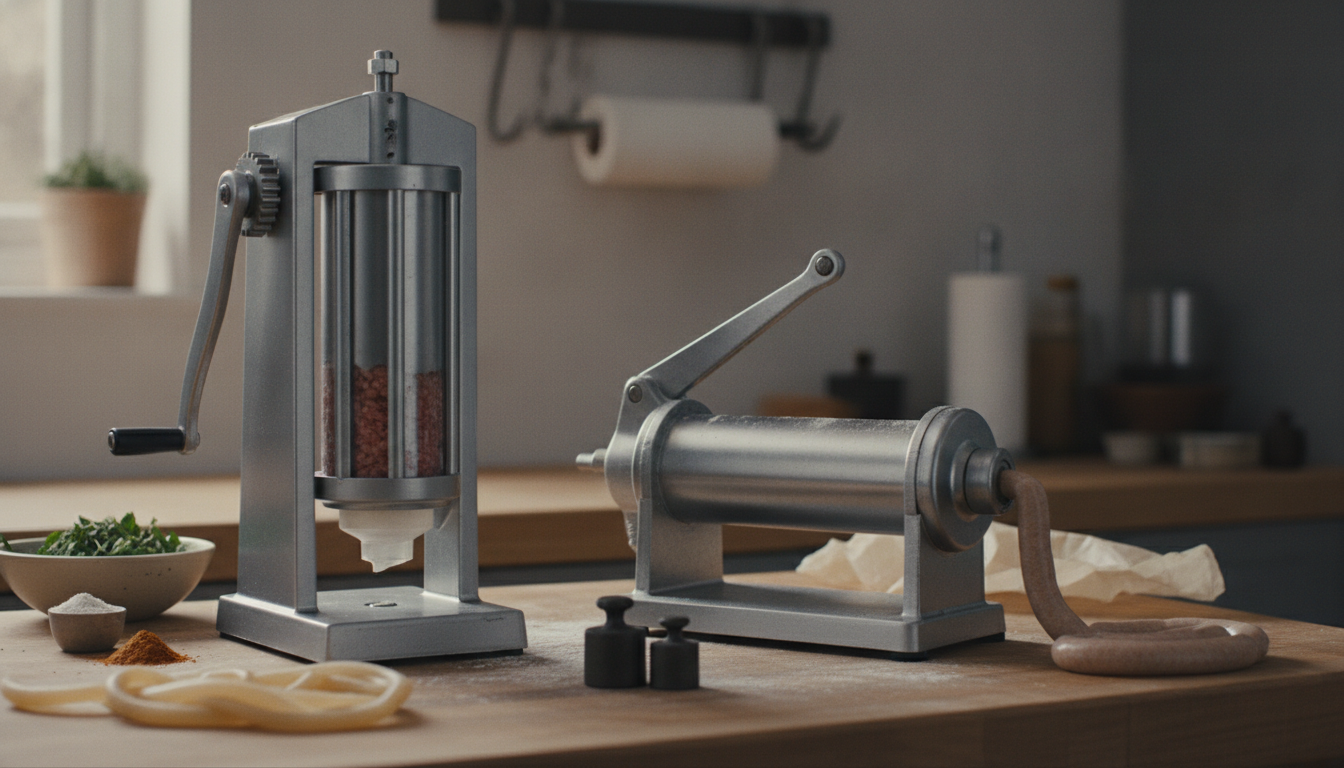
A vertical stuffer stands upright, making it a practical option when your counter is narrow or you want to leave more room beside the machine for casings and finished links. Allow enough clearance above the unit to load the cylinder and operate its mechanism comfortably, rather than judging the fit by the base alone.
You may find the upright arrangement convenient if you prefer loading meat from above, although the best working height depends on your counter and the particular stuffer. Before choosing one, consider whether you can reach the loading area easily and have a stable surface where the unit will not shift as you work.
Check the product’s listed specifications when evaluating choose vertical for a smaller footprint.
Featured in this guide
Horizontal Sausage Stuffer with 5 Nozzles
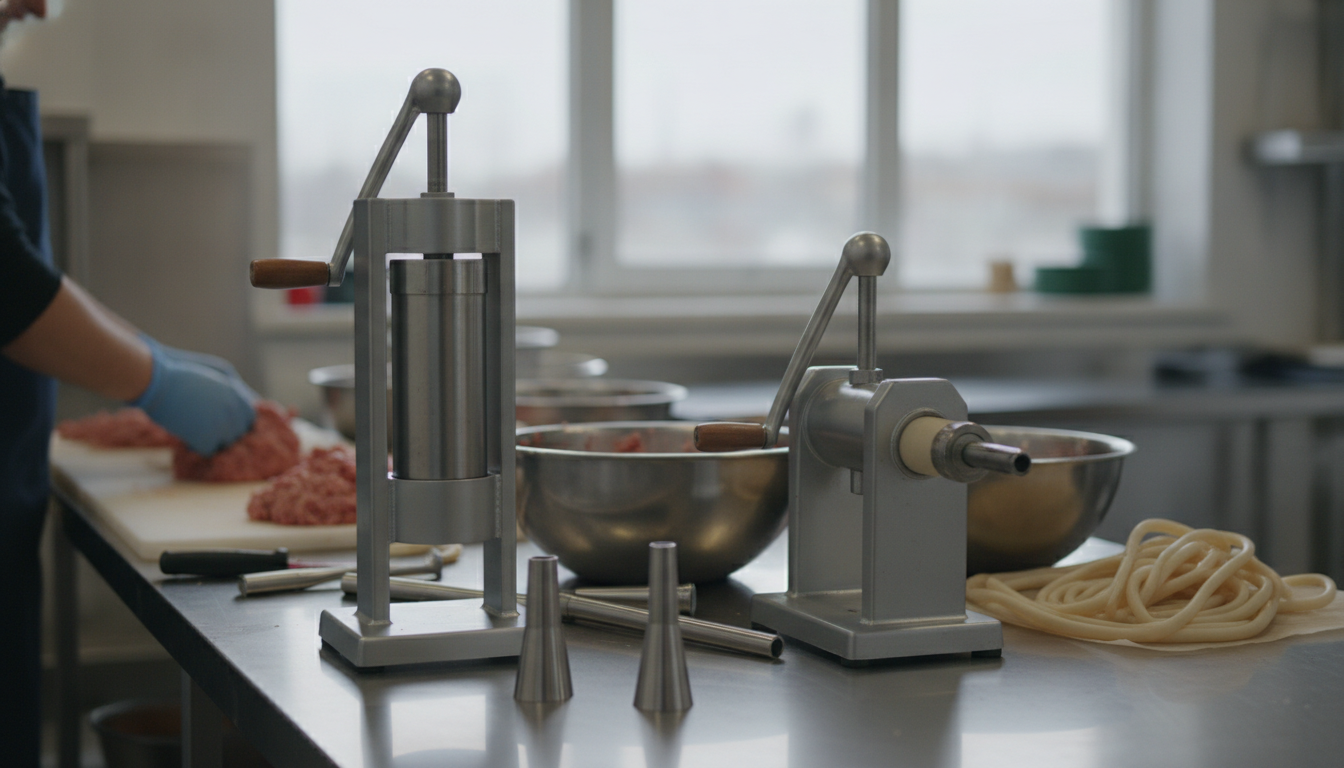
A horizontal stuffer places its cylinder along the counter, which may suit you if you prefer a lower loading position and have enough uninterrupted counter length. Leave room at the nozzle end to guide the casing and collect the filled sausage without crowding your work area.
Our Horizontal Sausage Stuffer with 5 Nozzles is an option if you prefer this layout and want a model supplied with multiple nozzles. When comparing any stuffer, consider how the cylinder is loaded, how the unit is secured during use, and whether its overall dimensions fit your intended workspace.
Whichever orientation you choose, prepare your casings and sausage mixture before you begin, then work steadily while guiding the casing so it fills without excessive tension. Keep raw meat and equipment clean, follow safe temperature practices, and cook or store your finished sausage according to the ingredients and recipe you use.
After stuffing, disassemble the food-contact parts as directed by the manufacturer and wash and dry them thoroughly before storage. Our team recommends thinking about where you will store both the stuffer and its separate parts, since a machine that fits your counter should also be manageable to put away.




Leave a comment