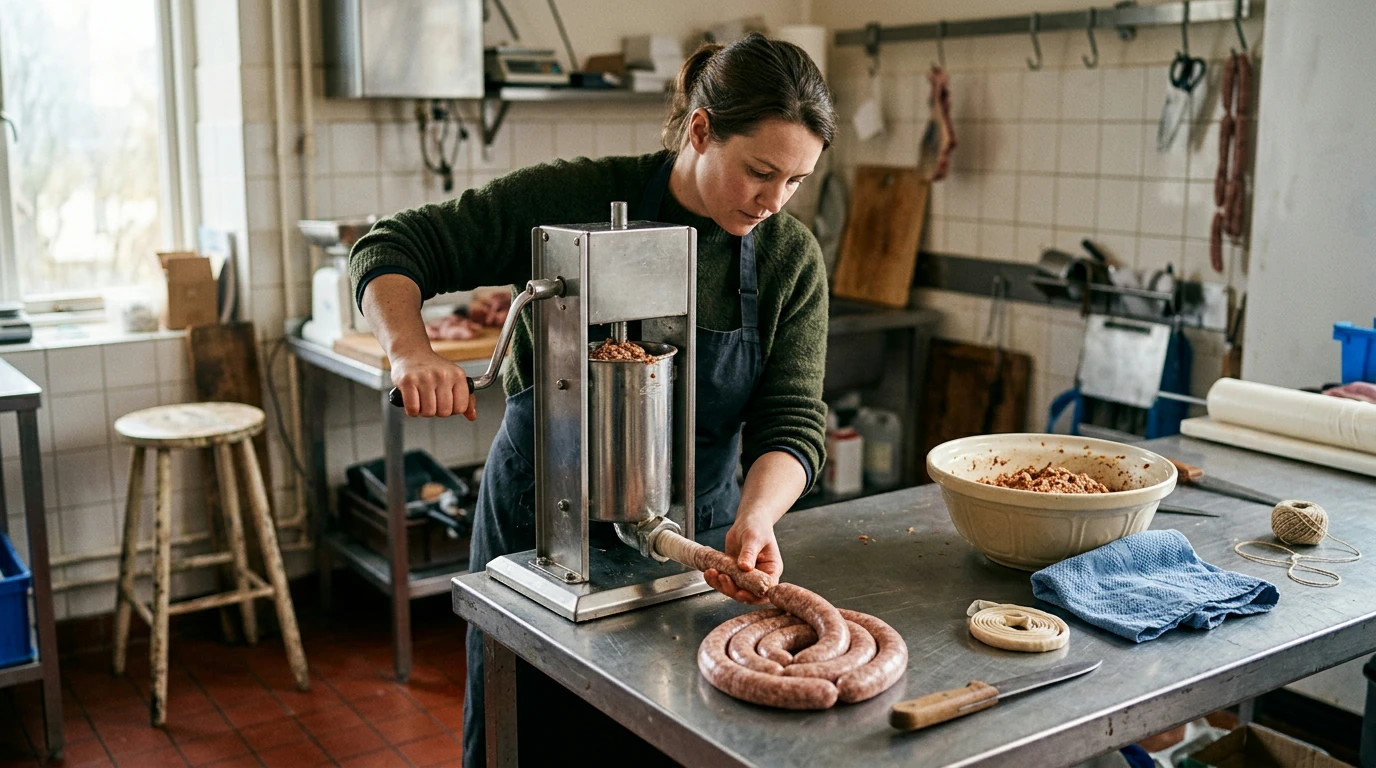
51% off on product page · save $172.31
Are Sausage Stuffers Worth It? A Practical Guide
A sausage stuffer can be worth it if you make sausages regularly, prepare larger batches, or want more control over how you fill casings. It gives you a dedicated tool for moving seasoned meat into casings, which can make the process easier to manage than improvising with a funnel or relying on an attachment you find awkward to use.
If you only make sausage once or twice a year, a separate stuffer may be harder to justify because it takes up storage space and adds another tool to clean. For an occasional small batch, using equipment you already own or making skinless sausage patties may be the more practical choice.
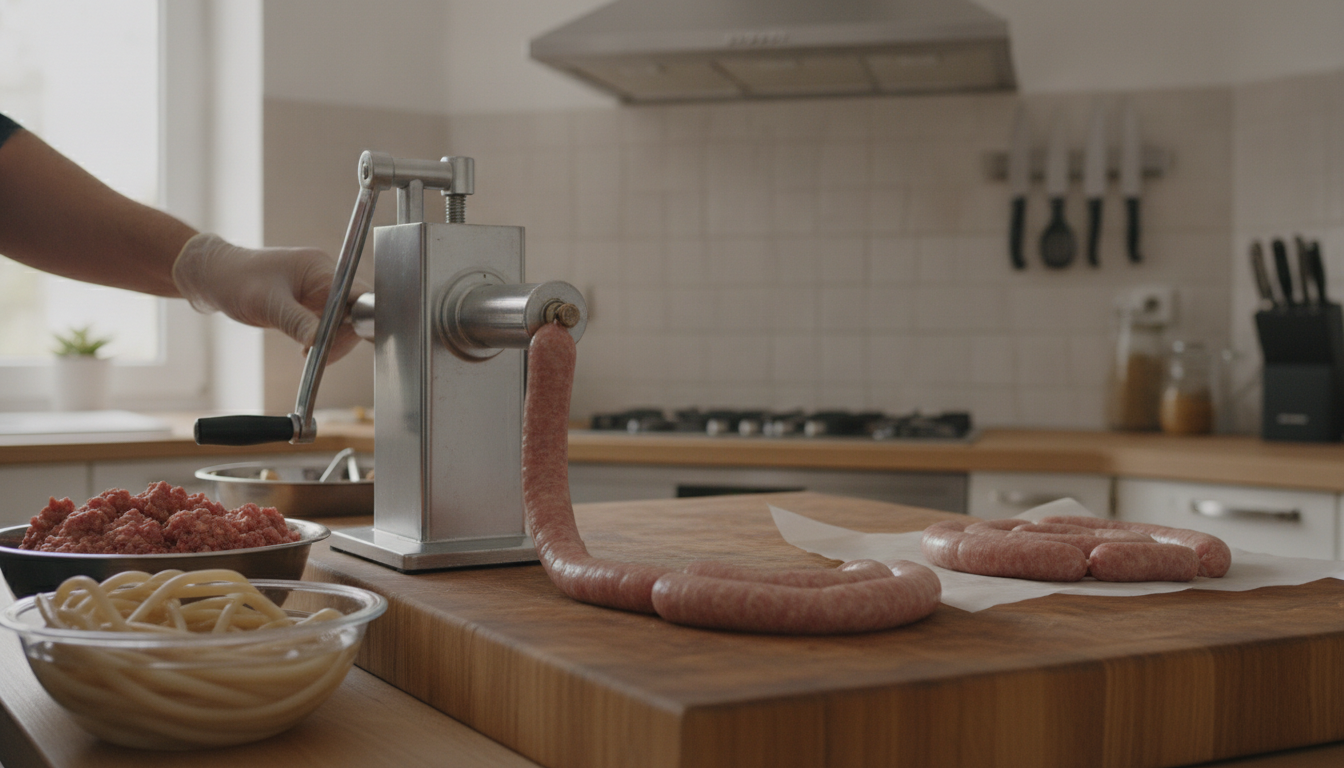
A dedicated stuffer focuses on filling casings, while a meat grinder with a stuffing attachment can combine grinding and stuffing tasks in one appliance. The better choice depends on how often you make sausage, how much counter space you have, and whether you prefer a separate tool for each step.
Manual filling methods can work for small batches, but controlling the flow of meat and keeping the casing evenly filled may take practice. A stuffer still requires attention: feeding the casing steadily and avoiding overly tight sections can help you form links without unnecessary splitting.
Featured in this guide
Horizontal Sausage Stuffer with 5 Nozzles
Before choosing a stuffer, consider the amount of sausage you typically make and where you will operate and store the equipment. Leave enough workspace to handle the casing and finished links comfortably, and think about whether the parts will be manageable to wash after each session.
Our guide to whether sausage stuffers are worth it can help you weigh those tradeoffs for your own kitchen. If you are considering a horizontal style, our Horizontal Sausage Stuffer with 5 Nozzles is one option to consider alongside the size of your batches and available space.
Prepare your meat mixture and casings before you begin, then work at a steady pace as you fill, leaving enough room to twist the sausage into links. If a casing tears or a section becomes too full, stop and adjust before continuing rather than forcing more mixture through.
After stuffing, clean the parts that contacted raw meat promptly with warm, soapy water, rinse them thoroughly, and dry them before storage. Keep the meat cold during preparation and follow safe handling practices for raw meat, including cleaning your work surfaces and utensils.
Yes, it can be a worthwhile addition if you make sausage often enough to use a dedicated filling tool. If your batches are rare or small, an existing grinder attachment or skinless patties may suit you better.
An antique sausage stuffer’s value depends on factors such as its condition, completeness, maker, materials, and buyer demand. To estimate a particular piece, compare similar completed sales and consider asking an antiques appraiser to examine it.




Leave a comment