
51% off on product page · save $172.31
Hakka vs LEM Sausage Stuffer: Which Is Better?
Neither Hakka nor LEM is automatically the better sausage stuffer for every kitchen; the better choice is the model that suits how much sausage you make, the space you have, and how comfortably you can operate and clean it. If you make sausage only occasionally, prioritize a manageable size and straightforward cleanup, while frequent or larger batches may justify a larger-capacity model that reduces the number of refills.
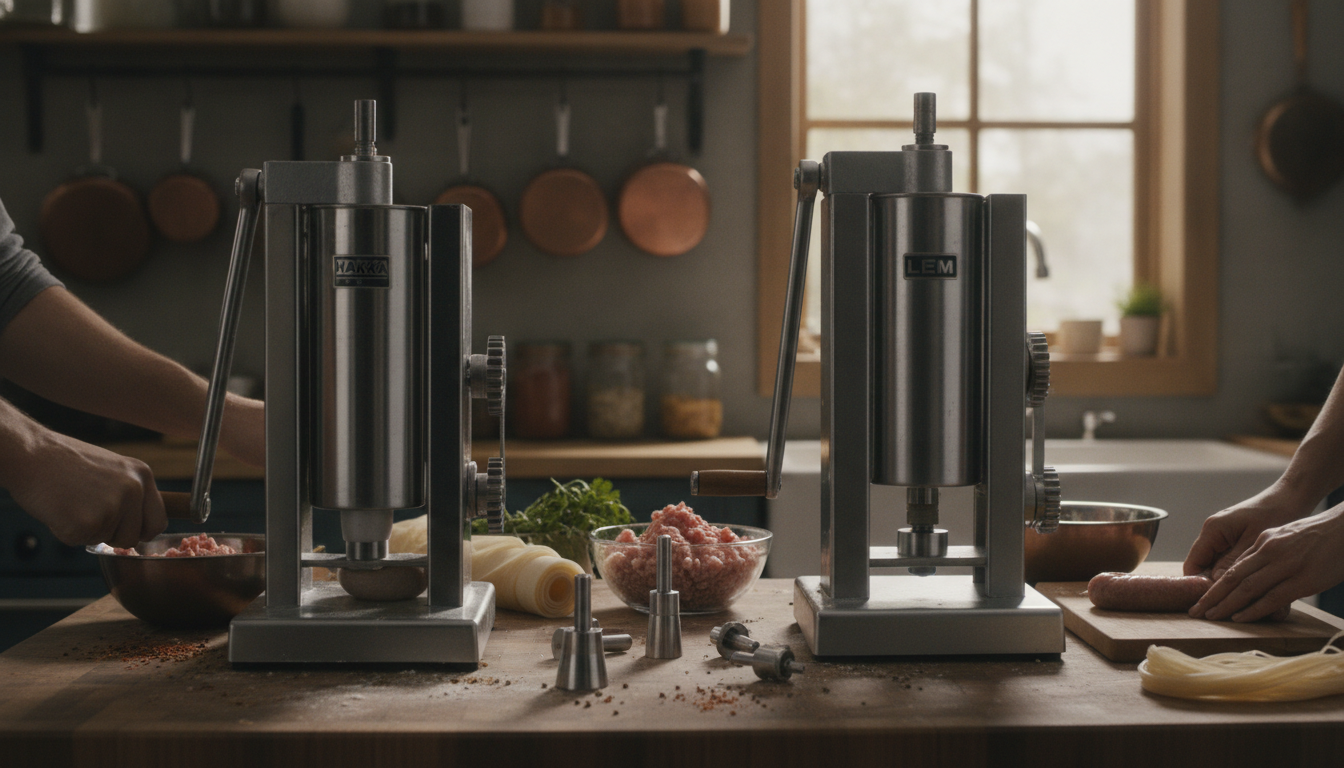
When comparing specific stuffers from either brand, look beyond the name to the cylinder capacity, included stuffing tubes, construction, and operating mechanism, because those details affect your day-to-day experience more directly than the logo. You can also read our Hakka versus LEM sausage stuffer guide as you decide which features matter most for your recipes.
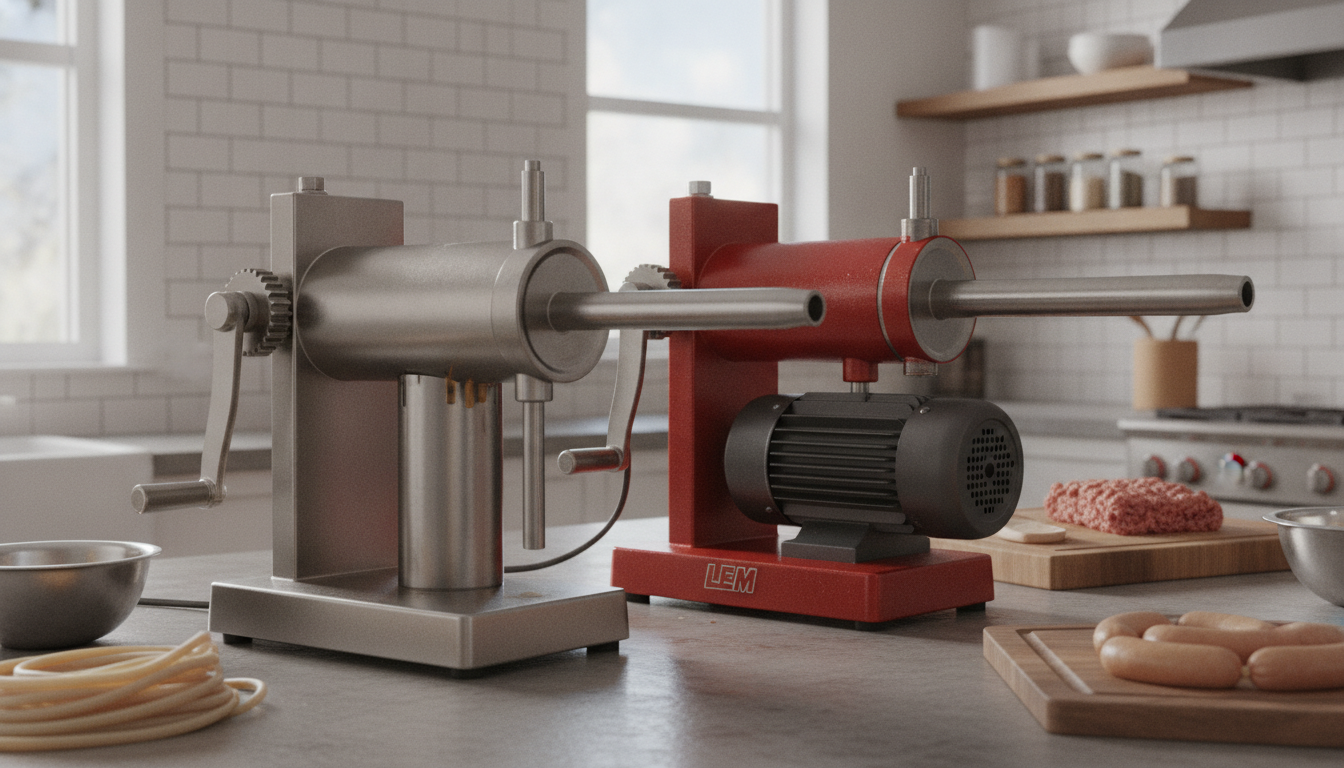
A smaller stuffer can be easier to store and handle when you make modest batches, though you may need to refill it more often; a larger cylinder can reduce interruptions but takes up more room and may be heavier to move when full. Think about where you will set up the stuffer and where you will keep it afterward, especially if your kitchen has limited counter or cabinet space.
Consider the layout as well: a horizontal stuffer has a different footprint and working position from a vertical model, so choose the arrangement that feels practical for your workspace and preferred cranking position. Our Horizontal Sausage Stuffer with 5 Nozzles is another option to consider if you are looking at horizontal designs and want a selection of nozzles.
Featured in this guide
Horizontal Sausage Stuffer with 5 Nozzles
Match the stuffing tube to the casing you plan to use: the casing needs to slide onto the tube without tearing, and smaller casings generally call for a narrower tube than larger ones. Before choosing a Hakka or LEM model, consider whether its included tubes suit the sausages you want to make or whether you would need additional sizes.
A stable setup and a crank you can turn comfortably make it easier to control the flow of filling, particularly when you are working alone and guiding the casing at the same time. For cleanup, favor a design you can take apart and wash thoroughly, and follow the manufacturer’s care instructions for its components rather than assuming every part is dishwasher-safe.
If you are choosing between two specific models, start with capacity and tube sizes, then compare their dimensions, materials, and how their parts come apart for cleaning. Pick the one that fits your typical batch and workspace without requiring you to compromise on the casing sizes you use most often.
Whichever stuffer you choose, keep raw meat chilled while you work, clean food-contact surfaces promptly, and avoid overfilling casings so they are less likely to split. Our team recommends making a smaller first batch to become familiar with the flow and pressure before tackling a larger sausage-making session.




Leave a comment